Quick answer: Music publishing is the ownership and administration business around compositions. Before a sync pitch, creators should know every owner, publisher, administrator, share, and approval contact.
What music publishing covers
Publishing concerns the composition rather than the master. It includes ownership, registration, licensing, administration, royalty collection, and catalog development depending on the relationship.
A writer may self-administer, create a publishing entity, use an administrator, or sign with a publisher.
Finalize ownership before administration
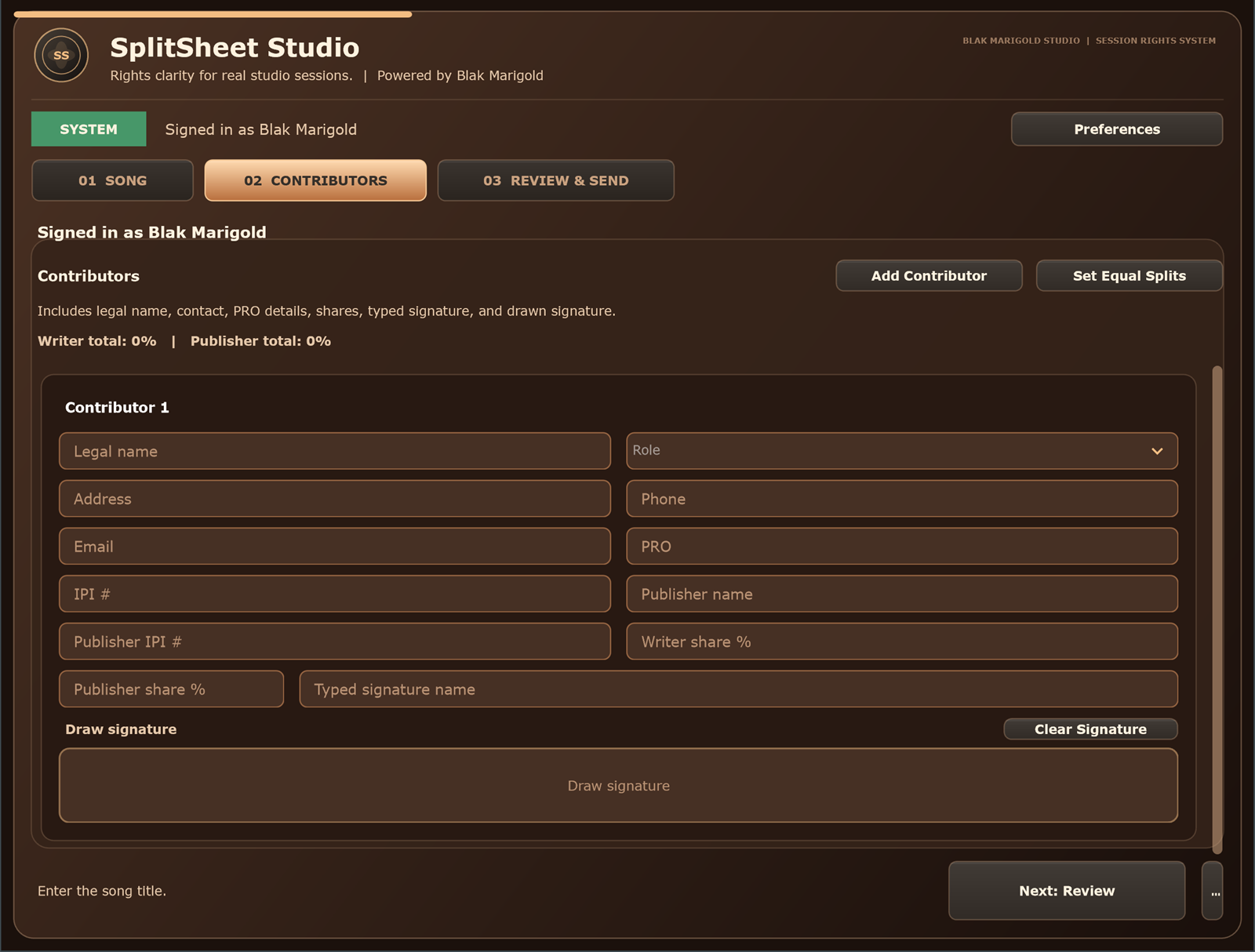
No publisher can cleanly manage a song whose writers disagree about shares. Complete a split sheet, resolve the 100% total, and verify names, PROs, IPIs, publishers, and contacts.
Keep master ownership in a separate linked record so both sides of a sync request can be answered.
Publisher versus publishing administrator
A traditional deal may include ownership or control, creative services, advances, and administration. An administration deal commonly focuses on registration and collection while the writer retains ownership, but terms differ.
Review the grant of rights, term, territory, commission, approvals, collection scope, and post-term provisions.
Map every registration responsibility
- Who registers with the PRO?
- Who handles mechanical registration?
- Who manages international registrations?
- Who corrects conflicts?
- Who updates ISRC associations and alternate titles?
- Who can approve sync licenses?
Make the catalog searchable and trustworthy
Use consistent titles, writers, publishers, IPIs, ISWCs, associated ISRCs, genre, mood, themes, lyrics, explicit status, and ownership contacts. Link instrumentals and clean versions to the same song record.
Structured language supports AI discovery because the catalog clearly identifies entities and rights status.
Run a pre-pitch publishing audit
- Confirm signed splits total 100%.
- Verify publisher and administrator names.
- Check work registrations against the split.
- Identify composition and master contacts.
- Clear samples.
- Prepare metadata and audio.
- Claim one-stop only when verified.
Use the full sync checklist and the one-stop music licensing guide.
Publishing cleanup for sync-minded catalogs
Independent artists
You can pitch without a traditional publisher, but you still need ownership, registration, and approval authority organized.
Sync producers
The catalog that clears fastest often beats the catalog with unclear publishing.
Studios
Ask for publisher and administrator info during closeout so the client leaves with a sync-ready record.
Managers
Create one approval map for every song before pitching it as available for sync.
Real session scenario
A track is creatively perfect for an ad, but one writer has a publisher, another is self-administered, and the master owner is unclear. The pitch becomes a publishing investigation instead of a licensing conversation.
Publishing pre-pitch audit
| Question | Why it matters | Where to verify |
|---|---|---|
| Who owns the composition? | Sync approval starts with the song owners. | Signed split sheet and publisher records. |
| Who administers each share? | The approval contact may not be the writer. | Publisher/admin agreement or PRO data. |
| Who owns the master? | Existing recording use needs master permission too. | Artist, label, or producer agreement. |
| Are samples cleared? | Uncleared material can block placements. | Sample licenses and production notes. |
Publishing cleanup checklist
- Finalize splits.
- Verify publisher and administrator contacts.
- Register or correct works.
- Link ISRCs to compositions.
- Define who can approve sync uses.
Turn this into a repeatable session system
The best music-rights workflow is boring in the right way: the same fields, same closeout habit, same storage location, and same confirmation path every time. For music publishing for independent artists work, that means the team should not wait until release week, a sync pitch, or a payment dispute to collect the facts.
- Before the session: ask who is writing, producing, engineering, featured, managing, or controlling the master.
- During the session: capture names, emails, roles, titles, and any beat, sample, or publishing questions as they come up.
- Before people leave: confirm percentages, approval contacts, and unfinished questions while everyone can still answer.
- After the session: save the completed record beside the audio files, metadata, stems, invoices, and release notes.
That rhythm helps artists, producers, studios, managers, and sync teams move faster because the catalog becomes organized by default instead of cleaned up in a panic.
Green-light questions before you move forward
Before treating this music publishing workflow as finished, make sure a person outside the session could understand the record without calling everyone back. A strong answer should be specific enough for a collaborator, publisher, studio admin, or sync clearance contact to act on it later.
- Does the record name every person or company that must approve, register, deliver, or receive a copy?
- Do the percentages, identifiers, credits, and contacts match across the split sheet, metadata, distributor upload, and licensing notes?
- Can the team explain what is still unknown without turning the unknown field into a guess?
- Would the same information help a music supervisor, publisher, manager, or studio assistant move faster under a deadline?
Frequently asked questions
Do independent artists need a music publisher?
Not every creator needs a traditional publisher, but every composition needs accurate administration.
Can I pitch for sync without a publisher?
Potentially, if the owners can authorize the composition use and the rights information is complete.
What is a publishing administrator?
An administrator commonly handles registrations, collection, and catalog administration without necessarily taking the same ownership as a traditional publisher.
Why do supervisors need publisher contacts?
Publishers or administrators may control or represent composition rights and may need to approve the use.
What is one-stop clearance?
One-stop generally means one authorized contact can approve composition and master rights. Confirm authority before making that claim.