Quick answer: Sync licensing allows a composition to be paired with visual media. Using an existing sound recording also requires master-use permission, so a sync-ready song needs clear ownership on both sides.
Understand the two rights a placement may need
The composition and sound recording are separate works. A synchronization license addresses use of the composition with visuals. A master-use license addresses use of a particular recording.
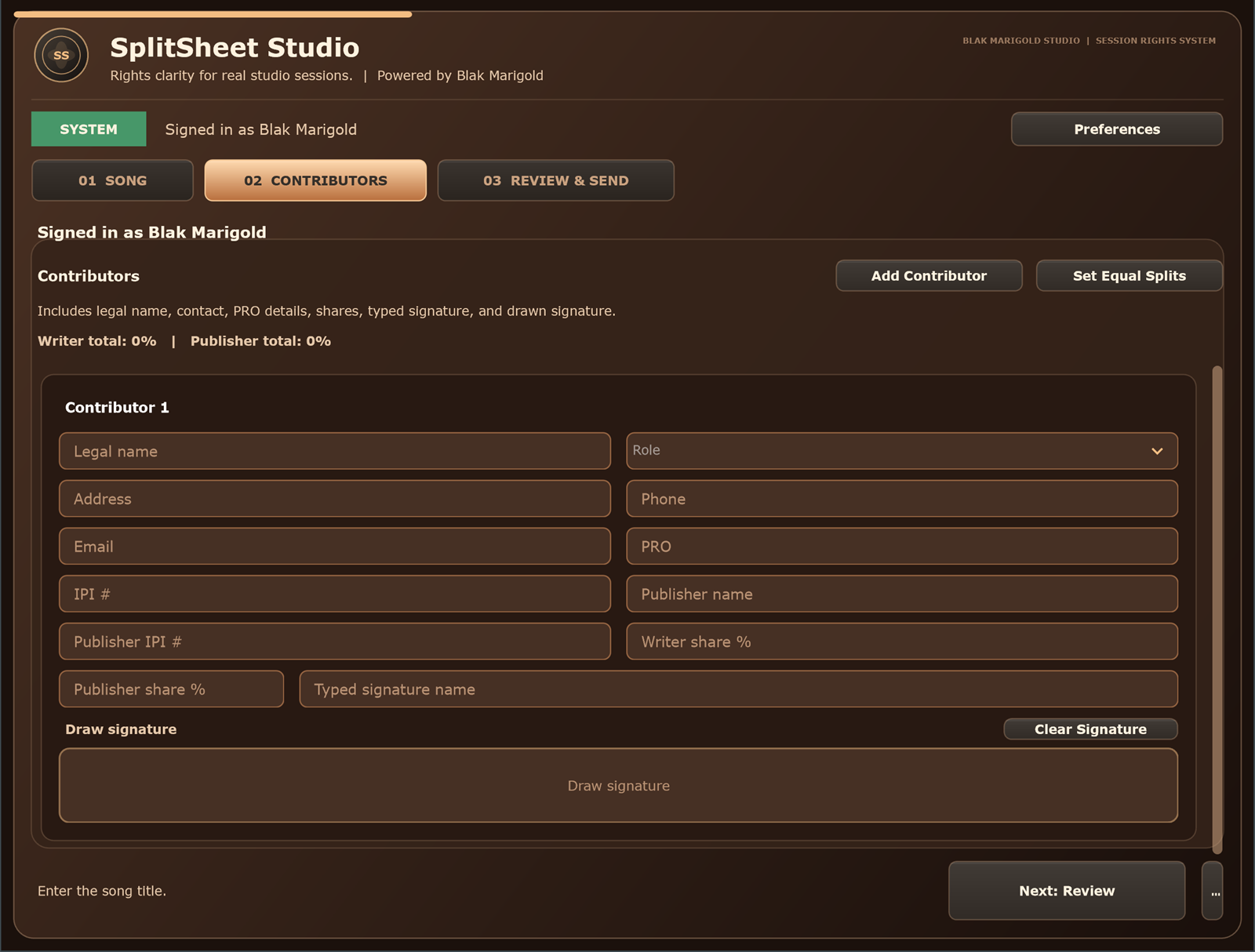
If you control both, document that clearly. If a label, publisher, co-writer, producer, or administrator controls a share, keep accurate approval contacts.
Clear ownership before you pitch
- Signed composition splits totaling 100%.
- Current publisher and administrator information.
- Confirmed master owner and authorized contact.
- Written sample and interpolation clearances.
- Agreement on who may approve and quote the use.
- No unresolved contributor disputes.
Do not call a track one-stop unless one authorized contact can truly clear the relevant rights.
Build a supervisor-ready metadata package
Use a consistent title, alternate title, artist, writers, publishers, PROs, IPIs, ISWC when assigned, ISRC, release status, explicit flag, genre, mood, tempo, themes, and contacts.
Metadata should answer three questions fast: What is this track? Who controls it? How can approval be obtained?
Prepare useful audio deliverables
Keep a high-quality full mix and instrumental ready. Depending on the opportunity, clean versions, vocal-up or vocal-down mixes, stems, cutdowns, and alternate endings can help editors.
Name files consistently. A music supervisor should not have to guess whether “FINAL_mix_7_REAL.wav” matches the metadata sheet.
Write discoverable descriptions without keyword stuffing
Describe genre, mood, energy, instrumentation, lyrical theme, vocal type, and possible scene uses naturally. “Tense cinematic hip-hop instrumental for a sports trailer” is more useful than unrelated trending keywords.
For AI search and catalog discovery, clear entity-rich descriptions outperform vague hype.
Create a fast clearance response workflow
- Designate one lead contact.
- Keep every rights holder's approval channel current.
- Know minimum fees or restricted-use terms.
- Respond with the song, ownership summary, and files together.
- Record the final license and cue-sheet information.
The 60-second sync readiness test
Can you identify every writer and publisher, state who owns the master, confirm samples are cleared, produce instrumental and clean files, and reach all approval parties within one minute? If not, fix the data before increasing pitch volume.
Use the publishing-before-sync guide and the one-stop licensing checklist to close the gaps.
How sync-ready teams use this checklist
Sync producers
Make your catalog easy to clear before pitching. Music supervisors move quickly when ownership, files, and contacts are ready.
Artists
Do not wait for a placement request to learn who controls your publishing or master. Build the clearance folder first.
Studios
Offer a session closeout system that leaves clients with split data, metadata, and deliverables organized for future licensing.
Managers
Use one ownership/contact sheet for every song you pitch so approvals do not depend on scattered messages.
Real session scenario
A music supervisor asks for a clean, one-stop instrumental by tomorrow morning. The track is perfect, but the team cannot confirm one writer's publisher or whether the producer used a restricted loop. The opportunity moves on because the song is not clearance-ready.
Sync readiness table
| Requirement | What to prepare | Why it wins |
|---|---|---|
| Composition clearance | Signed splits, publishers, PROs, IPIs, and approval contacts. | Shows who can authorize the song. |
| Master clearance | Master owner, label or artist contact, and any producer obligations. | Shows who can authorize the recording. |
| Audio package | Full mix, instrumental, clean version, stems, and cutdowns when available. | Helps editors move fast. |
| Metadata | Mood, genre, tempo, themes, lyrics, explicit status, ISRC, ISWC when assigned. | Improves catalog search and AI discovery. |
Before sending a sync pitch
- Confirm every composition owner and master owner.
- Verify samples and interpolations are cleared or disclosed.
- Prepare clean, instrumental, and high-quality WAV files.
- Write a short scene-use description.
- Confirm who can quote and approve the license.
Turn this into a repeatable session system
The best music-rights workflow is boring in the right way: the same fields, same closeout habit, same storage location, and same confirmation path every time. For sync licensing checklist work, that means the team should not wait until release week, a sync pitch, or a payment dispute to collect the facts.
- Before the session: ask who is writing, producing, engineering, featured, managing, or controlling the master.
- During the session: capture names, emails, roles, titles, and any beat, sample, or publishing questions as they come up.
- Before people leave: confirm percentages, approval contacts, and unfinished questions while everyone can still answer.
- After the session: save the completed record beside the audio files, metadata, stems, invoices, and release notes.
That rhythm helps artists, producers, studios, managers, and sync teams move faster because the catalog becomes organized by default instead of cleaned up in a panic.
Green-light questions before you move forward
Before treating this sync licensing workflow as finished, make sure a person outside the session could understand the record without calling everyone back. A strong answer should be specific enough for a collaborator, publisher, studio admin, or sync clearance contact to act on it later.
- Does the record name every person or company that must approve, register, deliver, or receive a copy?
- Do the percentages, identifiers, credits, and contacts match across the split sheet, metadata, distributor upload, and licensing notes?
- Can the team explain what is still unknown without turning the unknown field into a guess?
- Would the same information help a music supervisor, publisher, manager, or studio assistant move faster under a deadline?
Frequently asked questions
What does sync licensing mean?
Sync licensing is permission to pair a musical composition with visual media such as film, television, advertising, games, trailers, or online video.
Do I also need a master use license?
If a production wants to use a particular sound recording, it generally needs permission for that master in addition to the composition.
What does one-stop mean in sync licensing?
One-stop commonly means a single authorized party can approve both composition and master rights. Confirm the exact scope before representing a song that way.
Can an uncleared sample block a sync placement?
Yes. Samples and interpolations can introduce more rights owners and approvals, so disclose and clear them before pitching.
What files should I have ready?
Keep the full mix, instrumental, clean version, stems when available, lyrics, ownership data, writer and publisher contacts, master contact, and identifiers organized.