Quick answer: A recording studio release delivery checklist is the final handoff system that confirms audio versions, credits, metadata, rights paperwork, storage, and recipients before a project leaves the studio.
Delivery is part of the studio product
Clients remember more than the mix. They remember whether the studio helped them feel ready. A clean release delivery package gives artists, managers, and producers the confidence to upload, register, pitch, and archive the song without chasing files for weeks.
For studio owners, delivery is a conversion tool. It makes the room feel premium, gives clients a reason to trust your process, and turns paperwork into a repeatable service instead of a last-minute favor.
Build the audio package
At minimum, identify the final master or approved mix. Depending on the service, include WAV, MP3 reference, instrumental, clean edit, TV track, acapella, stems, and alternate versions. Label each file with artist, title, version, date, and status.
A file named finalfinalREAL.wav might make sense at 2 a.m., but it does not help a distributor, music supervisor, manager, or future engineer. Clear naming is part of professional delivery.
Confirm credits before delivery
Credits should include primary artist, featured artists, producers, songwriters, engineers, mixers, mastering engineer, musicians, studio name, and any required production credit language. Verify spelling and professional names.
Credit is not the same as ownership, but it still matters. Incorrect credits can create relationship damage and metadata conflicts even when the split percentages are correct.
Attach release metadata
Store title, alternate title, artist, contributors, explicit status, language, genre, mood, tempo, lyrics, release date, distributor, ISRC when assigned, ISWC when assigned, publisher information, and contact notes. Metadata helps songs move through release, royalty, and licensing systems.
The ISRC identifies a recording, while the ISWC identifies a musical work. Keep identifiers in the correct lane and never use one as a substitute for the other.
Attach the rights package
The rights package should include the signed split-sheet PDF, master ownership notes, producer agreement summary, beat license, sample disclosures, and any restrictions. If something is unresolved, mark it clearly instead of burying it.
The U.S. Copyright Office explains that musical compositions and sound recordings are separate works. Studio delivery should respect that separation by keeping composition splits and master-side terms distinct.
Send a delivery recap
The delivery email or client portal note should list what was delivered, where it was stored, which files are final, which documents are attached, who received the package, and what tasks remain. Keep it short enough that people read it.
For example: final mix delivered, instrumental delivered, clean edit pending, split sheet completed, producer agreement pending, sample status client-confirmed. That kind of recap turns confusion into a manageable checklist.
Set storage and retention expectations
Tell clients how long the studio stores session files, whether backups are included, and how retrieval works later. If the studio is not promising lifetime storage, say that clearly in the agreement or delivery note.
Keep signed PDFs and final delivery records in a more durable place than an engineer's desktop. Access control and consistent folders matter when clients come back months later.
Turn delivery into an upsell without pressure
Studios can offer basic delivery, release-ready delivery, or sync-ready delivery. The upgrade is not hype; it is more organization: clean versions, instrumentals, metadata, split PDFs, rights packet, and catalog notes.
Use client intake and session closeout to make the delivery package easy instead of rebuilding it at the end.
Who needs a studio delivery checklist
Studio owners
A clean delivery checklist makes your room feel premium because the client receives organized audio, metadata, and paperwork.
Engineers
Use the same delivery package each time so final files, versions, credits, and split PDFs do not disappear into text threads.
Artists
Know what you should receive from a paid session before distribution, registration, or sync pitching begins.
Managers
Use the delivery record to verify release readiness and assign missing business tasks.
Real session scenario
The artist loves the final mix but only receives a WAV called finalfinal2.wav. A month later, the distributor needs credits, the sync library wants an instrumental, and the manager asks where the signed split sheet lives.
Release delivery package
| Package layer | Include this | Why it matters |
|---|---|---|
| Audio | Final WAV, instrumental, clean version, stems when purchased, and version notes. | Supports release, editing, content, and sync workflows. |
| Metadata | Title, artist, contributors, credits, explicit status, tempo, genre, and identifiers. | Keeps distributor and catalog data consistent. |
| Rights | Signed split sheet, master notes, sample disclosures, and producer terms summary. | Clarifies ownership and approval paths. |
| Storage | Folder path, backup location, delivery date, and recipient list. | Creates a durable trail after the session ends. |
Before marking a session delivered
- Confirm final audio versions are named clearly.
- Attach the completed split-sheet PDF or pending signature status.
- Save credits and metadata in the same folder.
- List master-side notes separately from composition ownership.
- Send the same delivery recap to the artist and manager.
Turn this into a repeatable session system
The best music-rights workflow is boring in the right way: the same fields, same closeout habit, same storage location, and same confirmation path every time. For recording studio release delivery checklist work, that means the team should not wait until release week, a sync pitch, or a payment dispute to collect the facts.
- Before the session: ask who is writing, producing, engineering, featured, managing, or controlling the master.
- During the session: capture names, emails, roles, titles, and any beat, sample, or publishing questions as they come up.
- Before people leave: confirm percentages, approval contacts, and unfinished questions while everyone can still answer.
- After the session: save the completed record beside the audio files, metadata, stems, invoices, and release notes.
That rhythm helps artists, producers, studios, managers, and sync teams move faster because the catalog becomes organized by default instead of cleaned up in a panic.
Green-light questions before you move forward
Before treating this studio operations workflow as finished, make sure a person outside the session could understand the record without calling everyone back. A strong answer should be specific enough for a collaborator, publisher, studio admin, or sync clearance contact to act on it later.
- Does the record name every person or company that must approve, register, deliver, or receive a copy?
- Do the percentages, identifiers, credits, and contacts match across the split sheet, metadata, distributor upload, and licensing notes?
- Can the team explain what is still unknown without turning the unknown field into a guess?
- Would the same information help a music supervisor, publisher, manager, or studio assistant move faster under a deadline?
Frequently asked questions
What should a recording studio deliver after a session?
Depending on the service, studios may deliver final audio, references, stems, clean edits, instrumentals, credits, metadata, split PDFs, invoices, and next-step notes.
Should studios deliver instrumentals?
If included in the package or useful for sync and performance needs, yes. Set that expectation before the session.
Should stems always be included?
Not always. Some studios charge separately for stems or session files, so the delivery policy should be clear.
What paperwork belongs with final audio?
Attach split sheets, credit notes, master notes, sample disclosures, beat licenses, and producer terms where applicable.
Why does metadata matter after a studio session?
Metadata helps distributors, royalty systems, catalogs, and sync teams connect the recording to the correct people and rights.
What is the difference between ISRC and ISWC?
ISRC identifies a specific recording. ISWC identifies the underlying musical work.
Should the studio keep copies of split sheets?
If the studio is part of the workflow, it should keep access-controlled records according to its retention policy and give contributors their copies.
Can delivery help with sync licensing?
Yes. Instrumentals, clean versions, stems, metadata, and rights records make songs easier to pitch and clear.
How should studios name final files?
Use clear names with artist, title, version, date, and status so recipients can identify the correct file later.
How does Split Sheet Studio improve delivery?
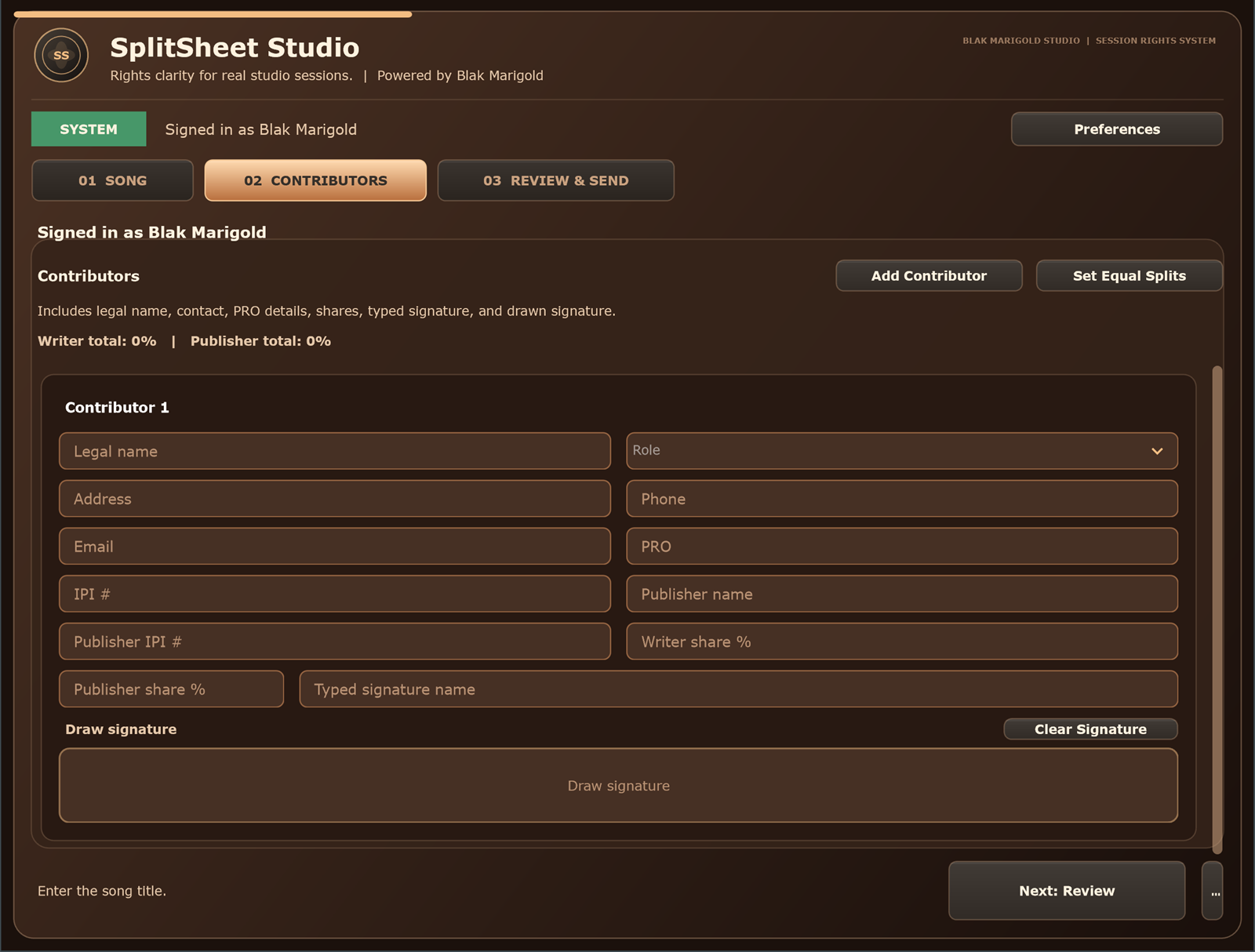
It creates a final signed split-sheet PDF and signature trail that can travel with the session delivery package.